Back Pain
Correction vs. Compensation: Why Most Back Pain Treatments Fail
June 27, 2026
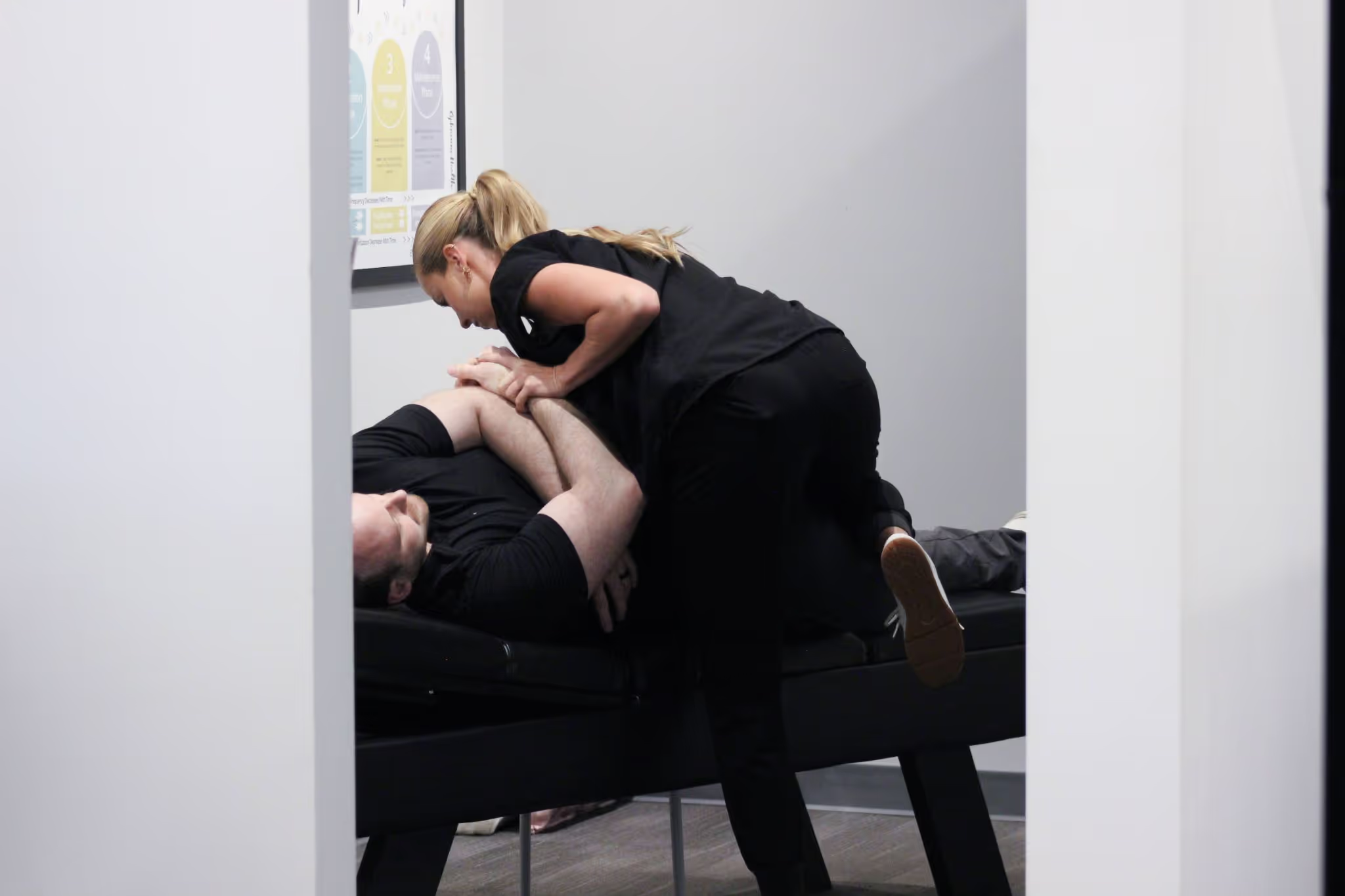
Back pain is one of the most common reasons people start changing how they sit, sleep, work out, or even get through the day. For many, back pain is an ongoing cycle where the pain improves for a little period, then comes back with vengeance. In fact, studies suggest that up to 80% of people will experience back pain at some point in their lives, making it one of the leading causes of missed work and reduced mobility worldwide.
A big reason this happens is because many treatments focus on relieving symptoms instead of addressing what causes the pain is. Medication, rest, stretching, massage, or repeated short-term treatments may help temporarily, but likely won't correct the real problem. That is why so many people end up stuck in the same frustrating cycle, where the pain keeps returning, and the body starts adapting around it.
At Elite Wellness Chiropractic in Bee Cave, Dr. Mikala Booher, DC, focuses on correction instead of compensation. That means looking past the discomfort itself to understand how the body has adapted to the problem, identifying the root cause, and improving alignment and movement so the body can function properly again.
Key Takeaways
- Back pain often becomes a cycle of temporary relief followed by recurring flare-ups when the underlying problem is never fully addressed.
- Compensation patterns can cause the body to shift stress into other muscles and joints, which may lead to pain spreading into new areas over time.
- Correction-focused chiropractic care looks at posture, movement, alignment, and compensation patterns instead of only focusing on where the pain shows up.
- Detailed evaluations and digital X-rays can help identify what may be placing extra stress on the spine and surrounding joints.
- Long-term improvement often involves more than symptom relief alone. Movement patterns, stability, posture, and daily habits all play a role in recovery.
- Persistent stiffness, recurring pain, or reduced mobility may be signs that the body needs a more detailed evaluation.
The Frustration Cycle: Why Temporary Solutions Keep Us Going
The frustrating part about back pain is that a lot of options seem like they are working at first. The pain settles down for a few days, maybe even a few weeks, and you start thinking things are finally improving. Then it comes back again.
So, they bounce between pain medication, stretching routines, massage therapy, physical therapy, and repeated appointments that only calm the symptoms down temporarily. Studies suggest that more than 50% of people with chronic back pain rely on painkillers regularly, even though the underlying problem is still there.
After a while, it starts feeling like nothing actually lasts. The pain keeps returning, and even normal day-to-day things start getting harder again, and the body slowly begins compensating for the problem instead of functioning normally.
Understanding Compensation: The Body's Way of Adapting
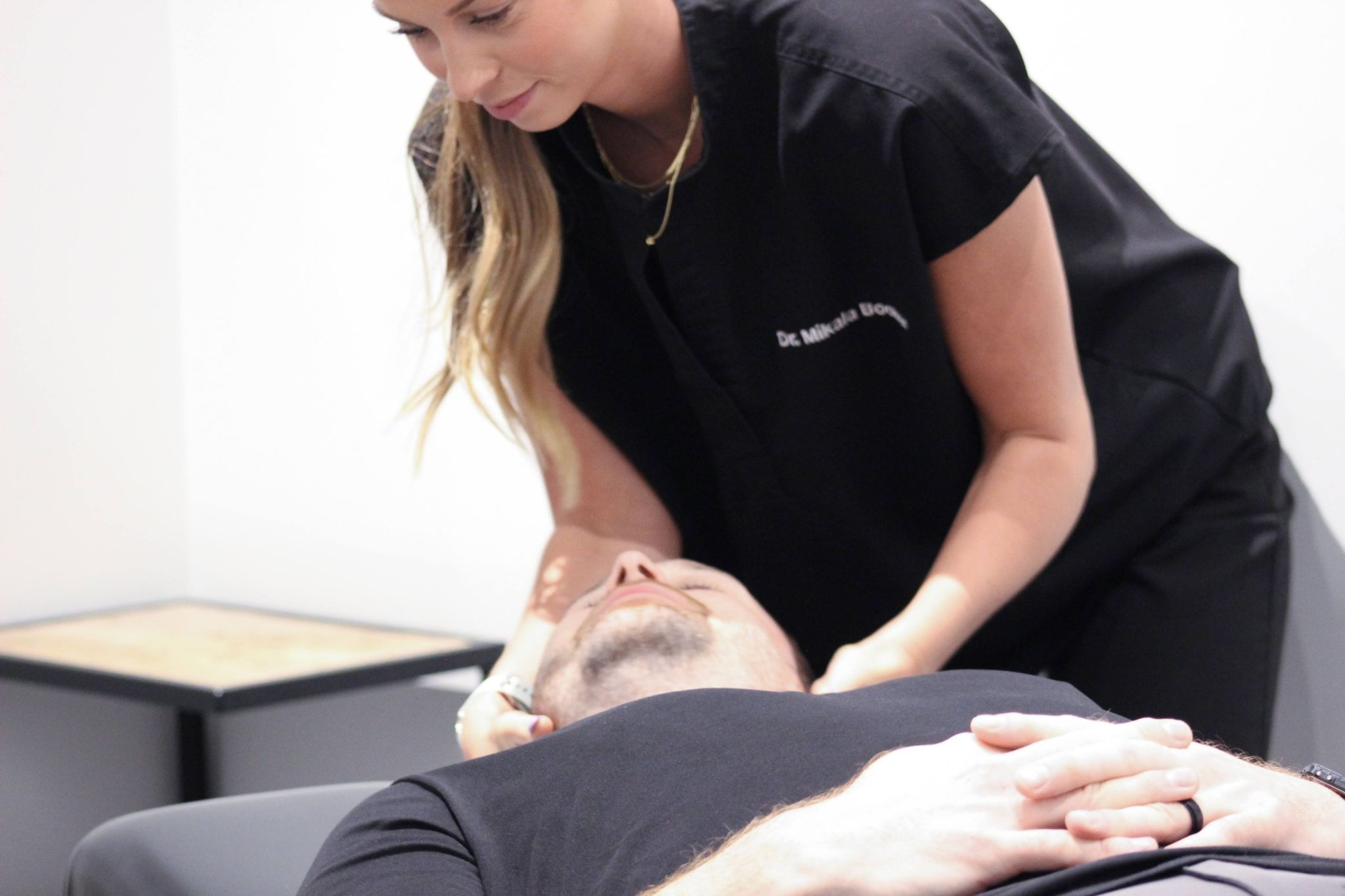
Image - Dr. Mikala Booher assessing a patient whose body has adapted to spinal stress
Compensation is the body's way of adapting when something is not functioning properly. Instead of moving normally, the body starts shifting stress to other muscles and joints to avoid pain or restriction.
That can help temporarily, but it usually creates a new problem somewhere else. A lower back issue may start affecting the hips, or radiate down the leg as sciatica. Neck tension can change the way someone sits, sleeps, or moves throughout the day. The original problem never fully improves, so other parts of the body begin taking on extra strain.
Research suggests these compensation patterns can increase the risk of secondary musculoskeletal problems by up to 30%. That is one reason pain often spreads or keeps returning even after short-term relief.
At Elite Wellness Chiropractic, correction-focused care is designed to identify those compensation patterns instead of just chasing the symptoms they create.
The Importance of Correction: Discovering the Real Problem
Chronic back pain rarely affects just one area for long. As the body tries to protect itself, posture, movement, and weight distribution can gradually change, which may place extra strain on other areas of the body over time.
Our goal is to identify where stress, imbalance, and compensation patterns are starting, then improve alignment and movement before those problems continue getting worse. Studies suggest patients receiving correction-focused care report higher satisfaction rates and longer-lasting relief compared to symptom-focused treatment alone.
We use detailed exams and digital X-rays to understand how the body is moving, where compensation patterns are developing, and what may actually be driving the pain long term.
Why Most Treatments Focus on Compensation: The Symptom-Chasing Trap
There are many conventional treatments that fall into the symptom-chasing trap, where the focus is on alleviating immediate discomfort rather than understanding the underlying causes. This approach often leads to a cycle of temporary relief, as patients may find themselves returning for repeated treatments without any real progress.
A survey of back pain patients found that 70% had tried multiple treatments without lasting success, often because the treatments addressed only symptoms. It's vital for patients to be aware of this!
What a Correction-Focused Approach Looks Like at EWC
At Elite Wellness Chiropractic, the correction-focused approach starts with identifying what may actually be causing the back pain instead of only focusing on the symptoms. Thorough assessments, digital X-rays, and personalized treatment plans help Dr. Mikala Booher, DC, understand how the body is moving, where compensation patterns are developing, and what may be contributing to recurring discomfort.
A correction-focused approach at EWC may include:
- Chiropractic adjustments designed to improve alignment and movement over time
- Corrective exercises that help with posture, stability, and long-term function
- Looking at compensation patterns instead of only focusing on the area that hurts
- Personalized treatment plans based on movement patterns, symptoms, and lifestyle factors
- Patient education to help people better understand what may be contributing to recurring pain
Clinical outcomes at EWC have shown significant reductions in pain scores and improved mobility in more than 85% of patients following a structured correction program.
When to Consider a Different Path
If current treatments aren't providing lasting relief, it may be time to look closer at your spinal structure. Early intervention and structural correction are vital; in fact, clinical studies show that chiropractic care can successfully prevent acute back pain from turning into a chronic, long-term condition for the majority of patients.
Persistent pain, recurring flare-ups, reduced mobility, or discomfort that keeps interfering with everyday life can all be signs that the body may need a more detailed evaluation. Chiropractic care, physical therapy, and other integrative approaches can provide additional options for relief and recovery.
Ready to Find Out What Your Body Is Actually Trying to Tell You?
Back pain can be frustrating because the symptoms are not always the real problem. The pain may settle down for a while, then return again because the same stress patterns are still there underneath it all.
Stiffness that never fully improves, recurring flare-ups, or discomfort that starts spreading into other areas of the body can all point to issues that still need attention. Temporary relief can help, but it does not always explain why the pain keeps coming back.
At Elite Wellness Chiropractic, Dr. Mikala Booher, DC, uses detailed exams and digital X-rays to look at how the body is moving, where compensation patterns are developing, and what may be placing extra stress on the spine and surrounding joints.
If you feel like you have been managing the same pain over and over again without lasting improvement, a more detailed evaluation may help uncover what has been missed.
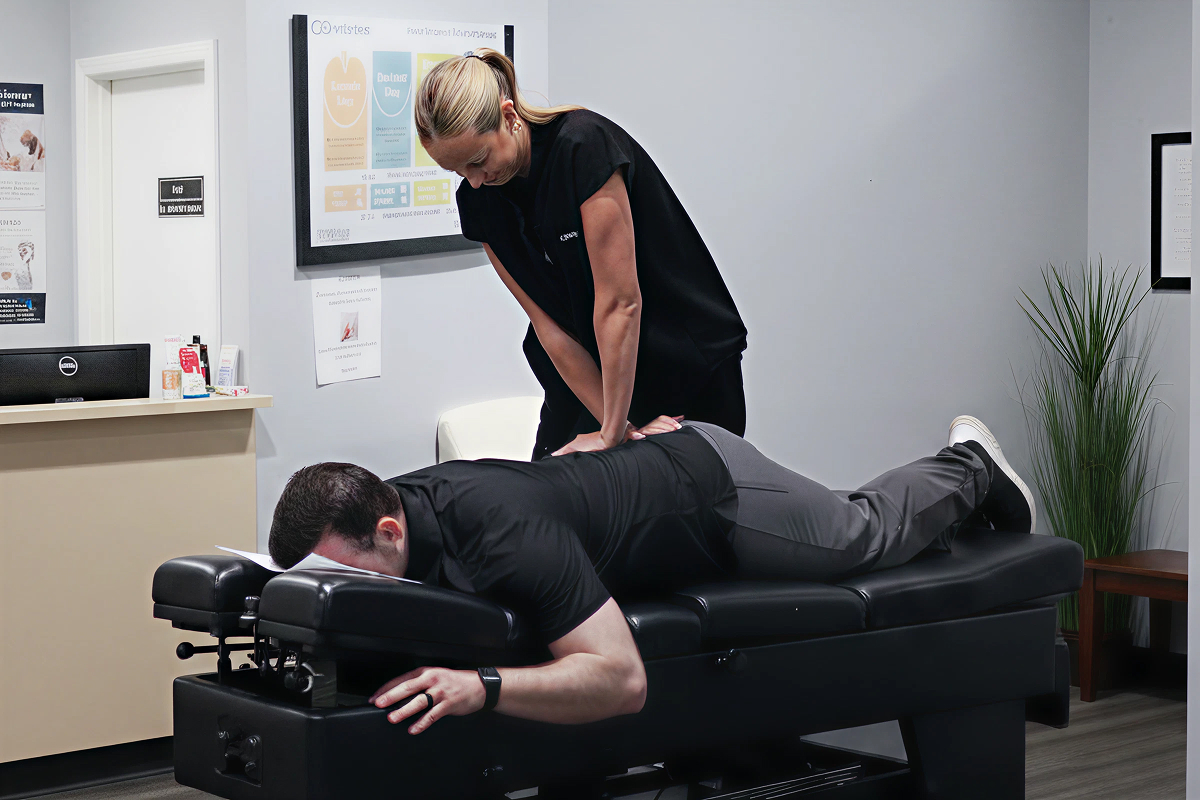
Image - Dr. Mikala Booher performing a spinal adjustment to help address the source of recurring back pain
Frequently Asked Questions
What are the common causes of chronic back pain?
Chronic back pain can come from several different factors, including poor posture, muscle strain, herniated discs, arthritis, and past injuries. Sitting for long periods, lack of exercise, repetitive stress, and extra pressure on the spine can also make symptoms worse over time.
Stress and tension can play a role, too, especially when the body stays tight or guarded for long periods. The challenge is that chronic pain is not always caused by one issue alone. Several movement problems and compensation patterns often happen at the same time.
How long does it typically take to see results from a correction-focused treatment?
Some people notice changes within a few weeks. Others take longer, especially if the problem has been building for years.
Lasting improvement usually comes from consistency. Showing up to appointments, doing the recommended exercises, and giving the body time to adapt all matter when the goal is more than temporary pain relief.
Are there any risks associated with chiropractic adjustments?
Chiropractic adjustments are generally safe when performed by a qualified professional. However, as with any medical treatment, there are potential risks, including temporary soreness, stiffness, or, in rare cases, more serious complications. It is essential to discuss any pre-existing conditions or concerns with your chiropractor to ensure a tailored approach that minimizes risks. For most patients, the benefits of chiropractic care often outweigh the potential risks.
What role does exercise play in back pain management?
Exercise is an important part of managing back pain, especially when the right muscles are being strengthened and supported. Improving flexibility, stability, and movement can help reduce stress on the spine and lower the risk of future injuries.
Certain exercises may also help improve posture and correct movement imbalances that place extra strain on the body over time. Clinical guidelines for chronic back pain commonly recommend structured movement and exercise because patients who stay active often report better mobility and physical function than those who avoid movement completely.
How can I prevent back pain from recurring after treatment?
Keeping back pain from returning usually comes down to the small things people do every day. Posture, movement, exercise, lifting habits, and even how long someone sits without moving can all place stress on the spine over time.
Chiropractors often encourage patients to stay active, maintain strength and flexibility, and avoid falling back into the same movement patterns that may have contributed to the problem in the first place. That may include posture changes, stretching, corrective exercises, or simple adjustments to daily routines.
Regular follow-up care can also help catch smaller problems before they turn into bigger flare-ups again.
What should I expect during my first chiropractic visit?
Your first chiropractic visit is usually focused on gathering information and figuring out what may be contributing to the problem. That often includes a detailed health history, a physical examination, posture evaluation, and testing things like movement, flexibility, and areas of discomfort.
Dr. Mikala Booher also uses digital X-rays when needed to get a clearer look at alignment and movement patterns that may be placing stress on the body. From there, treatment recommendations are based on what is actually found during the assessment instead of using the same approach for every patient.
What is the difference between correction and compensation in back pain treatment?
Correction and compensation are two very different approaches to back pain treatment. Correction focuses on improving alignment and movement to address what may actually be causing the pain, while compensation happens when the body starts adapting around the problem instead.
Compensation can temporarily reduce discomfort, but those movement changes often place extra stress on other muscles and joints over time. That is one reason pain can keep returning or start spreading into other areas of the body.
Why do most back pain treatments fail?
A lot of back pain treatments only provide temporary relief. The pain settles down for a while, but because the underlying issue was never fully addressed, the same symptoms often come back again weeks or months later.
How does Elite Wellness Chiropractic approach back pain differently?
Elite Wellness Chiropractic focuses on figuring out why the pain keeps returning instead of only helping it calm down temporarily. Dr. Mikala Booher, DC, uses detailed evaluations, movement testing, and digital X-rays when needed to identify compensation patterns, alignment issues, and other factors that may be contributing to the problem.
When should I consider seeking alternative treatments for back pain?
If your symptoms persist despite ongoing treatment or if you find yourself caught in a cycle of temporary relief, it may be time to explore alternative therapies or seek a second opinion.
Can understanding my body's signals help in managing back pain?
Yes. The body often gives warning signs before pain becomes more severe or starts affecting daily movement. Recurring stiffness, pain that spreads into other areas, or discomfort that never fully improves can all point to underlying problems that still need attention.

Dr. Mikala Booher
Chiropractor and Owner at Elite Wellness Chiropractic
Featured Articles

Unlocking Holistic Wellness: Elite's Comprehensive Chiropractic Care
Most people associate chiropractic care with the 'back crack,' but the real goal is restoring movement, improving alignment, and helping your body function the way it's meant to. At Elite Wellness Chiropractic in Bee Cave, comprehensive corrective care focuses on the root cause of your pain instead of temporary symptom relief. Using detailed exams and digital X-rays, Dr. Mikala Booher, DC, builds personalized plans that support lasting improvements in posture, mobility, energy, and overall well-being.
Unlocking Holistic Wellness: Elite's Comprehensive Chiropractic Care

Unlock Lasting Relief for Tech Neck: Beyond Temporary Fixes
Struggling with tech neck? Learn how corrective chiropractic care at Elite Wellness in Bee Cave can relieve neck pain, improve posture, and restore lasting comfort.
Unlock Lasting Relief for Tech Neck: Beyond Temporary Fixes