Migraines
The Spinal Connection: How Neck Misalignment Triggers Headaches and Migraines
July 10, 2026
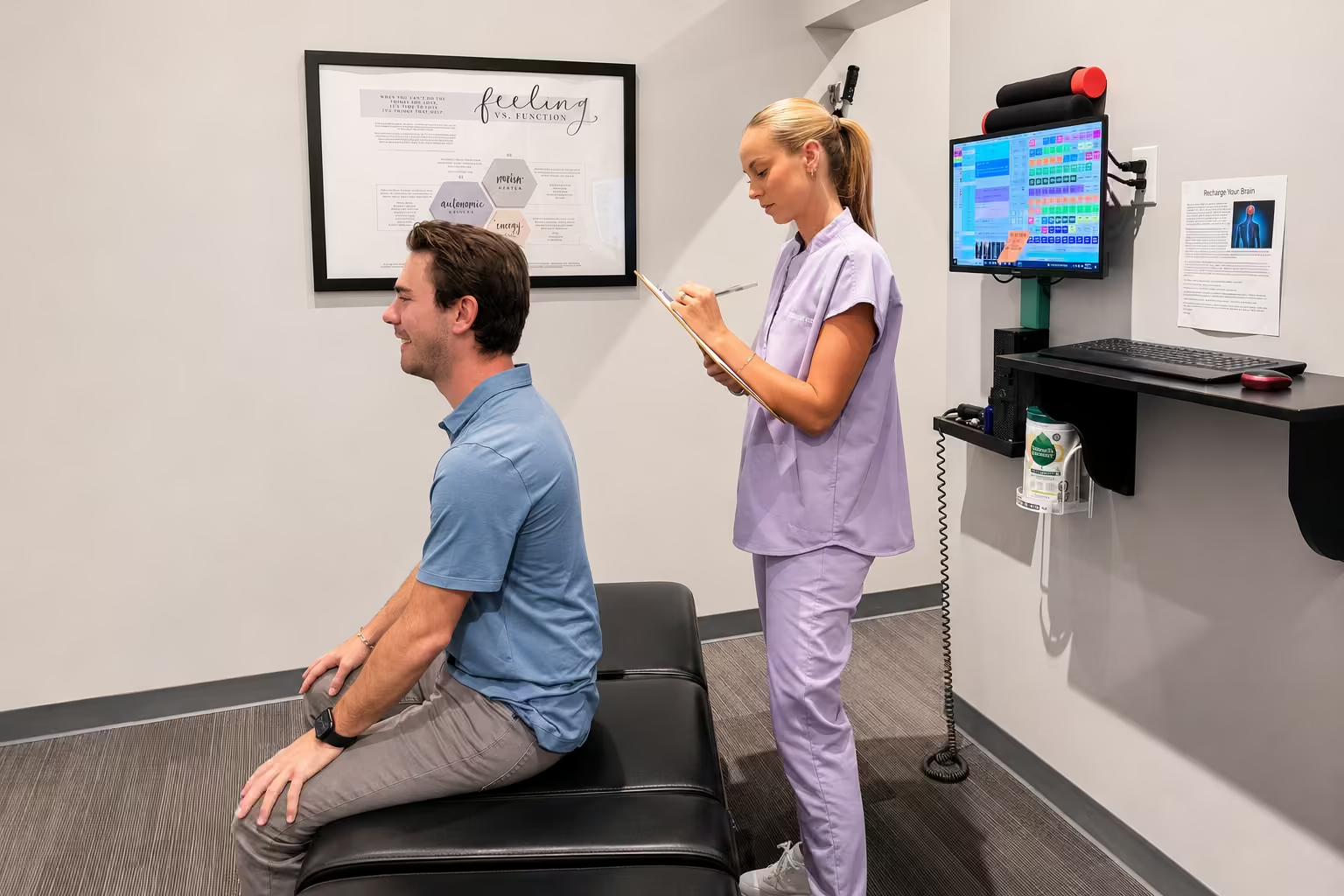
That dull ache that starts at the base of your skull and creeps up behind one eye isn't always a headache problem. Sometimes, it starts in your neck. Neck-related headaches are often mistaken for tension headaches or migraines because the symptoms can feel so similar. If your headaches tend to show up after a long day at your desk, or they almost always affect the same side of your head, there's a good chance your neck deserves a closer look.
The Nerve Pathway That Turns a Stiff Neck Into Head Pain
If you've ever wondered how a problem in your neck can cause pain behind your eye or across your forehead, it comes down to the way your nerves are connected.
The top three nerves in your neck (C1, C2, and C3) share a communication center in your brainstem with the trigeminal nerve, which carries sensation from your face and head. This area is called the trigeminocervical nucleus. When irritated joints or muscles in your neck send pain signals there, your brain can interpret them as a headache instead of neck pain.
That's why a stiff joint near the base of your skull can feel like pressure behind one eye or pain across your temple. Doctors call this a cervicogenic headache, which simply means a headache that starts in the neck.
There's another reason neck problems can trigger headaches. Just beneath the base of your skull is a small group of muscles called the suboccipital muscles. They sit around the greater occipital nerve, and when they stay tight from hours of looking down at a laptop or phone, they can irritate that nerve.
The result is often a burning or throbbing pain that travels from the back of your head toward one side. This is known as occipital neuralgia, and it's another way neck tension can show up as head pain.
This same nerve connection also helps explain why neck pain is so common during migraines. Research suggests that around 7 out of 10 people with migraines experience neck pain before or during an attack. That doesn't mean the neck causes every migraine, but for many people, it can be one of the triggers that sets an attack in motion.
How Your Neck Ends Up Out of Alignment

Neck alignment problems don't happen overnight. They usually develop from the small things you do every day without thinking about them.
Hours spent looking down at your phone, working on a laptop, or sitting with your head pushed forward place extra strain on the joints and muscles at the top of your neck (also known as tech neck). That repeated stress can change how your neck moves and functions.
Your head weighs about 10 to 12 pounds when it's balanced over your shoulders. But the farther it tilts forward, the heavier it becomes for your neck to support. At a steep angle, that load can increase to 40 to 50 pounds. If you spend most of your workday in that position, it's easy to see why your neck starts to complain.
Other everyday habits can add to the problem, including:
- Sleeping on your stomach with your head turned to one side
- An old whiplash injury from a car accident or fall that never fully healed
- Carrying stress in your shoulders, which keeps your neck muscles tight
- Using a pillow that's too high or too flat for the way you sleep
None of these habits may seem like a big deal on their own. But over months or years, they can stiffen your joints, tighten your muscles, and irritate the nerves that contribute to neck-related headaches.
Whiplash is one cause that's often overlooked. Headaches don't always begin the same day as the accident. It's common for stiffness and pain to appear days or even weeks later after the initial soreness has settled.
If your headaches started sometime after a rear-end collision or another neck injury, even one that seemed minor at the time, there's a good chance the two are connected.
Cervicogenic Headache or Migraine? How to Tell Them Apart
Neck-related headaches and migraines can feel very similar. Both can affect one side of your head and last for hours or even days. The difference is where the pain starts and what tends to trigger it.
A cervicogenic headache usually begins in the neck or at the base of the skull before spreading upward. It often gets worse when you move your neck, stay in the same position for too long, or have limited neck movement.
A migraine, on the other hand, is more likely to cause throbbing pain along with nausea or sensitivity to light and sound.
Signs your neck may be driving your headaches include:
- Pain that starts at the base of your skull and spreads upward
- Headaches triggered or worsened by certain neck positions or movements
- Reduced range of motion, such as difficulty checking your blind spot while driving
- Tenderness when you press the muscles at the top of your neck
- Pain that stays on the same side, attack after attack
Migraines can also have features that point away from the neck. Visual auras, headaches that switch sides, or attacks that happen without any neck pain are more consistent with migraine or another underlying cause.
The challenge is that the two conditions can overlap. Some people experience both, which is why a thorough evaluation is often the best way to figure out what's actually driving your headaches.
What Actually Helps
If your headaches are coming from your neck, treating the headache alone usually isn't enough. Lasting improvement comes from addressing what's irritating the joints, muscles, and nerves in the first place.
For headaches with a clear neck-related cause, hands-on chiropractic care has strong research behind it. Studies suggest that spinal manipulation and mobilization of the upper neck can reduce both how often cervicogenic headaches occur and how severe they feel. A chiropractor can identify which joints aren't moving properly and work to restore healthy movement.
Migraines are a little different. Chiropractic care doesn't treat the migraine disorder itself, but it can help reduce one common trigger: neck tension. Many people find they experience fewer migraine attacks once that source of irritation is addressed.
There are also a few simple changes you can start making at home:
- Raise your screen so it's at eye level instead of looking down all day.
- Stand up and move every 30 minutes if you spend most of your day sitting.
- Sleep on your back or side instead of your stomach when possible.
- Try gentle chin tuck exercises to help improve forward head posture.
When headaches become frequent, start interfering with work or sleep, or continue coming back despite your best efforts, it's time for a professional evaluation. And if you ever experience a sudden, severe headache, or one that's accompanied by fever, confusion, weakness, or follows a head injury, seek medical attention immediately.
What to Expect at a Chiropractic Evaluation

Your first visit isn't about jumping straight into an adjustment. It starts with understanding your symptoms and what may be causing them.
Your chiropractor will ask when your headaches began, where the pain is located, what seems to trigger it, and what you've already tried. Those answers often provide important clues about whether your neck is contributing to your headaches before the physical exam even begins.
Next comes the physical examination. Your chiropractor will check how well your neck moves in each direction, look for tight muscles and tender joints, and assess your posture to see how your head and shoulders are positioned. These findings help identify areas that may be contributing to your pain.
X-rays aren't necessary for everyone. But if you've been dealing with headaches for a long time or have a history of neck injuries, they may be recommended to get a clearer picture of how your cervical spine is aligned and to rule out anything that could change your treatment plan.
A good chiropractor should also explain what they find in language you can understand. You should leave your appointment knowing what's contributing to your headaches, why it's happening, and what the next steps look like.
Common Questions About Neck-Related Headaches
Can a misaligned neck really cause migraines?
Not directly. A misaligned neck can trigger migraines in people who are already prone to them. Because the nerves in your upper neck share pathways with the nerves that carry pain from your head, irritation in the neck can help set off an attack. The neck usually isn't the underlying cause of a migraine disorder, but it can be one of the triggers.
How long does it take to feel better with treatment?
Many people notice an improvement within a few weeks of starting consistent care, but everyone's recovery is different. It depends on what's causing your headaches, how long the problem has been there, and how your body responds to treatment. A neck that's been under strain for years usually takes longer to improve than a recent flare-up.
Are neck adjustments safe for headaches?
For most people, yes. Before recommending any treatment, your chiropractor will review your health history and perform a thorough examination to make sure chiropractic care is appropriate for you. If anything suggests an adjustment isn't the right approach, your treatment plan will be adjusted accordingly.
If your headaches keep coming back and nothing seems to touch them, the answer might be sitting at the top of your spine. The team at Elite Wellness Chiropractic can examine your neck, pinpoint whether it's driving your head pain, and build a plan to fix the cause. Read more about chiropractic care for headaches and migraines, then book an evaluation to get to the bottom of it.

Dr. Mikala Booher
Chiropractor and Owner at Elite Wellness Chiropractic
Featured Articles

10 Posture Tips for Residents of Bee Cave, Texas
Improve your posture with these 10 practical tips from Elite Wellness Chiropractic in Bee Cave. Simple daily changes for better spinal alignment and less pain.
10 Posture Tips for Residents of Bee Cave, Texas

What to Expect at Your First Chiropractic Visit in Bee Cave
Wondering what happens at your first chiropractic appointment? Here's a clear walkthrough of the consultation, exam, X-rays, costs, and how to prepare for your visit at Elite Wellness Chiropractic in Bee Cave.
What to Expect at Your First Chiropractic Visit in Bee Cave

Unlock Lasting Relief for Tech Neck: Beyond Temporary Fixes
Struggling with tech neck? Learn how corrective chiropractic care at Elite Wellness in Bee Cave can relieve neck pain, improve posture, and restore lasting comfort.
Unlock Lasting Relief for Tech Neck: Beyond Temporary Fixes